

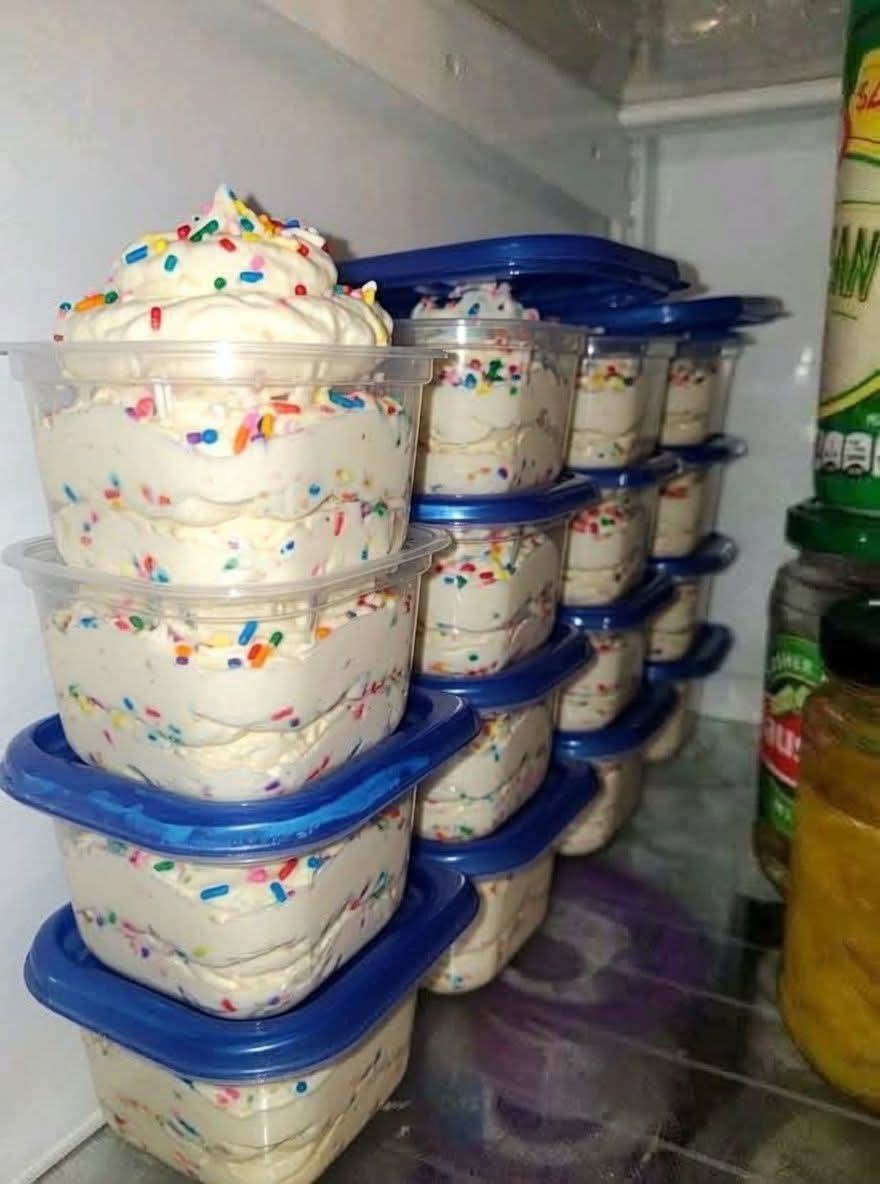
Protein Cake Batter Cheesecake
Introduction
Protein Cake Batter Cheesecake is the ultimate fusion of indulgence and fitness. It delivers the rich, creamy texture of classic cheesecake while boosting protein content using ingredients like Greek yogurt, protein powder, and light cream cheese. The “cake batter” flavor—sweet, vanilla-rich, and slightly buttery—adds a fun twist that makes this dessert feel like a celebration treat without the guilt.
Nutritional Information (Approx. per slice – based on 8 slices)
Calories: 180–220 kcal
Protein: 15–20 g
Carbohydrates: 10–15 g
Fat: 6–9 g
Sugar: 3–6 g
Fiber: 1–2 g
Ingredients
Crust (Optional but Recommended)
1 cup oat flour (or blended oats)
2 tbsp melted butter or coconut oil
2 tbsp honey or sugar-free syrup
1 tbsp milk
Cheesecake Filling
250 g light cream cheese (softened)
1 cup Greek yogurt (high-protein)
2 large eggs
½ cup vanilla protein powder
¼ cup sweetener (honey, maple syrup, or low-cal sweetener)
1 tsp vanilla extract
½ tsp almond extract (for cake batter flavor)
2 tbsp sprinkles (optional, for cake batter vibe)
Topping (Optional)
Light whipped cream
Extra sprinkles
Instructions
Step 1: Prepare the Crust
Preheat oven to 175°C (350°F).
Mix oat flour, melted butter, honey, and milk.
Press into a lined or greased pan.
Bake for 8–10 minutes, then cool.
Step 2: Make the Filling
Beat cream cheese until smooth.
Add Greek yogurt and mix well.
Add eggs one at a time.
Mix in protein powder, sweetener, vanilla, and almond extract.
Fold in sprinkles gently.
Step 3: Assemble
Pour filling over the cooled crust and smooth the top.
Step 4: Bake
Bake for 30–40 minutes until the center is slightly set but still jiggly.
Step 5: Chill
Let cool at room temperature, then refrigerate for at least 4 hours (preferably overnight).
Methods & Tips
Don’t overmix: Prevents cracks in cheesecake
Water bath (optional): Creates a smoother texture
Room temperature ingredients: Ensures a creamy batter
Chill time: Essential for structure and flavor
History & Inspiration
Cheesecake has ancient origins, dating back to Greece, where early versions were served to athletes. Modern cheesecake evolved over time, especially in the United States. The protein version is a recent innovation, reflecting the rise of fitness-focused recipes that combine traditional desserts with nutritional goals.
Formation (Structure of the Cheesecake)
Base: Soft, slightly chewy oat crust
Filling: Creamy, protein-rich cheesecake layer
Flavor: Sweet vanilla “cake batter” taste
Texture: Smooth, dense yet light
Why People Love It
High in protein
Lower in sugar than traditional cheesecake
Tastes like dessert but fits fitness goals
Customizable flavors
Great for meal prep
Variations & Methods for Lovers
For Sweet Lovers
Add white chocolate chips
Use flavored protein powder (birthday cake, vanilla caramel)
For Fitness Lovers
Use fat-free cream cheese
Replace sweetener with zero-calorie options
Skip crust for fewer calories
For Flavor Lovers
Add lemon zest or berries
Swirl peanut butter or chocolate into batter
Advanced Methods
No-bake version: Use gelatin or agar for setting
Air fryer cheesecake: Bake in small portions
Mini cheesecakes: Use muffin tins for portion control
Conclusion
Protein Cake Batter Cheesecake is proof that healthy eating doesn’t mean sacrificing flavor. It’s creamy, satisfying, and packed with protein—perfect for anyone balancing fitness and cravings. Whether you enjoy it as a dessert or a post-workout treat, it’s a recipe that brings both nutrition and joy together.